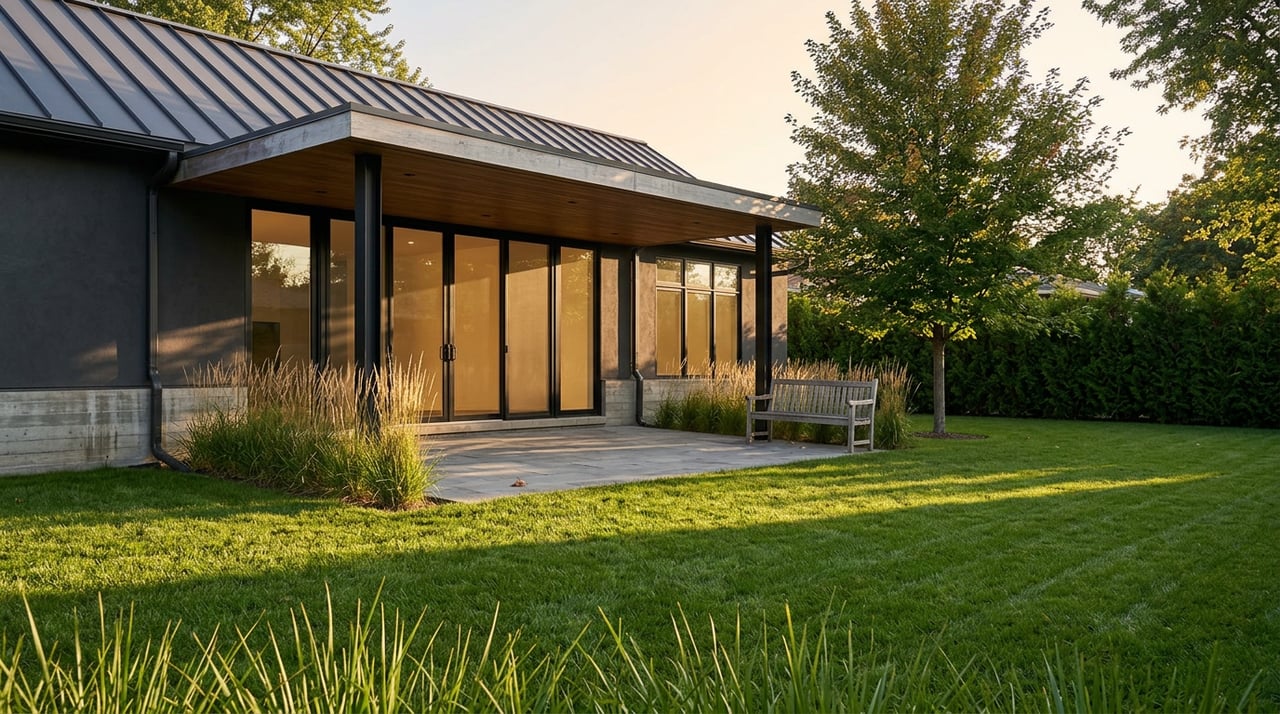
A client touring Lone Tree this spring stood in the backyard of a home in Carriage Club, looked out at the same fairway he'd seen an hour earlier from a yard in Heritage Hills, and asked the obvious question: why is this one priced six figures higher for what looks like the identical view.
The honest answer has nothing to do with golf and everything to do with branding. Lone Tree Golf Club & Hotel, the 18-hole course both homes back onto, is a public course. There is no membership to buy, no initiation fee, no waiting list tied to owning a particular address. Anyone with a tee time and a set of clubs can play it, whether they live in Lone Tree or drove down from Denver that morning. Once you know that, the premium some communities charge to sit near it stops looking like a golf fee and starts looking like something else entirely, a price tag attached to marketing rather than to access.
That distinction matters if you're comparing neighborhoods in Lone Tree right now, because the premium isn't consistent. It moves by tens of thousands of dollars between communities that share a fence line, and almost none of that movement is explained by the course itself.
What "golf course community" actually buys you here
Lone Tree's golf-adjacent product falls into a handful of communities that get marketed together but aren't priced together: Heritage Hills, Heritage Estates, Carriage Club, The Fairways, Terra Ridge, and the newer Montecito development, all within a few minutes of the same public course. Local buyer guidance circulating this year makes the mechanism explicit for one of them directly. In Carriage Club, the guidance states plainly, you're paying for the view and the green space, not for club access, and a buyer who doesn't care about that view can save more than $100,000 by choosing Heritage Hills instead, a community that backs onto the same course but doesn't carry the same branding.
That's the tell. When two products sit on the same public amenity but price six figures apart, the gap isn't paying for the course. It's paying for whichever HOA has done the better job attaching its name to the fairway.
Not every dollar in that gap is soft, though, and a buyer who treats the whole premium as marketing will get burned in the opposite direction. Some of what you're charged in these communities is real, structural cost:
Gated access and private security patrols. Heritage Hills has gated sections that carry genuinely higher carrying costs than ungated product nearby, because a gate, a guard rotation, and private road maintenance are line items an HOA has to fund whether or not anyone plays golf.
Sub-association maintenance scope. Attached product in and around RidgeGate bundles exterior maintenance, landscaping, and snow removal into the fee. That's a real service, not a brand premium, and it shows up whether the unit faces the course or a parking lot.
Amenity density. Pools, tennis courts, and clubhouse access cost money to maintain regardless of golf. A community with two pools and four tennis courts has a legitimately higher fee floor than one with a single shared green space.
What isn't structural is the assumption that "backs onto the course" is itself worth a premium, when the course is open to the public and requires no ownership stake to use.
The fee bands, and where the story breaks down
Local HOA guidance for Lone Tree groups the fee structure into three rough tiers: master-planned developments like RidgeGate, Montecito, and Heritage Hills typically run $75 to $300 a month; luxury and gated sections run $200 to $500 a month; and townhome or condo product, which often bundles exterior maintenance into the fee, runs $250 to $600 a month.
Notice that Heritage Hills, the community explicitly cited as the value alternative to Carriage Club's golf-course pricing, sits in the lowest of the three bands. It backs onto the same public course. It sits minutes from the same clubhouse. And by the fee structure alone, it's priced as a master-planned community, not a premium golf address. That's the gap the buyer standing in that Carriage Club backyard was actually paying for: not the golf, but the address's decision to market itself around the golf.
The practical move for a comparison-stage buyer is to stop asking "is this a golf course community" and start asking a narrower question for each specific property: does this fee fund something I would lose by buying two streets over, or does it fund the right to say I live near the course.
Why this is the moment to push back on that premium
Soft premiums, the kind built on branding rather than on hard amenity cost, are also the first thing to compress when a market cools, because there's no underlying scarcity holding the price up. Lone Tree's numbers this year give a buyer real room to test that.
As of March 2026, Redfin reported a median sale price of $872,000 in Lone Tree, down 3.1 percent year over year, with homes taking 23 days to sell on average, up from 19 days the prior year. By June 2026, Houzeo's tracking showed the median down further to $799,000, a 9.72 percent year-over-year decline, with average days on market stretching to 52 and the share of listings taking a price cut climbing from 55.17 percent to 61.54 percent over the same period. The sale-to-list ratio in that June data sat at 97.91 percent, meaning the typical home was still selling slightly under asking.
None of that describes a market in freefall. Longer-range forecasts cited alongside this same data still expect modest appreciation over the full year. But in the near term, sellers are sitting longer and cutting price more often than they were twelve months earlier, and that shift changes who holds the leverage on a soft premium specifically. A hard cost, gate maintenance, a private pool, doesn't move because the market softens. A brand premium, the extra a listing charges because its name sits next to a golf course, is exactly the kind of price a patient buyer can negotiate down when a listing has already sat for seven weeks instead of three.
What to ask before you pay the premium
Before treating any golf-adjacent price gap as fixed, ask for three things directly from the listing agent or the HOA:
Request the sub-association's specific budget and reserve disclosure, not just the headline monthly fee. The line items tell you whether the fee funds a gate and a private pool or mostly funds landscaping you'd get in any master-planned community nearby, and any HOA worth buying into should produce that budget on request before you're under contract.
Ask what the fee funded five years ago versus today, since a jump that outpaces the amenity list is a sign the association is catching up on deferred reserves, not a sign the community has added value.
Pull recent closed sales on the same street, not the same city, comparing units that face the fairway against otherwise identical units that don't. If the sale price gap between the two is smaller than the marketing gap, you have room to negotiate.
A short note on what doesn't change
Nothing here means the golf-adjacent communities are overpriced across the board, or that Heritage Hills is automatically the smarter buy for every family. Heritage Hills trades gate and clubhouse density for lower carrying cost. Carriage Club trades a higher fee for a specific view and a specific address. Both are legitimate choices. The point is narrower: know which one you're actually buying before you let "golf course community" do the persuading for you.
Frequently asked questions
Do I need a membership to play Lone Tree Golf Club & Hotel? No. It operates as a public course open to any golfer with a tee time, regardless of where they live.
Can I see the HOA's budget before I make an offer? Yes, and you should ask for it directly rather than relying on the headline monthly fee. A budget and reserve summary shows you exactly what the fee funds, which is the fastest way to tell a hard cost from a branding premium.
Is the price gap between golf-adjacent communities in Lone Tree likely to hold if the market keeps softening? Based on the days-on-market and price-reduction trends through mid-2026, soft premiums tied to branding rather than hard amenities are the ones most likely to compress further if that softening continues.
If you're weighing two Lone Tree addresses that both claim the same view and want to know which part of the price tag is real, that's exactly the kind of question worth working through before you write an offer. The Real Estate Doctor starts every client relationship with a strategic conversation, not a showing, so the numbers make sense before the search does.