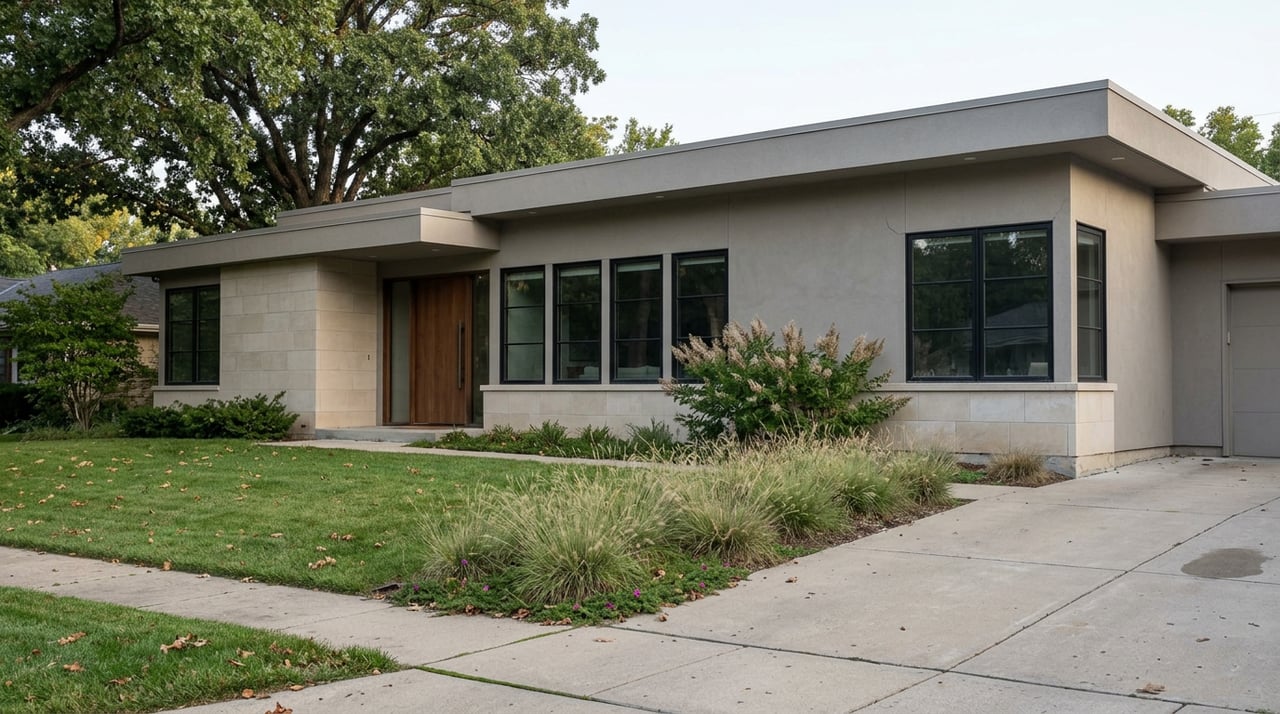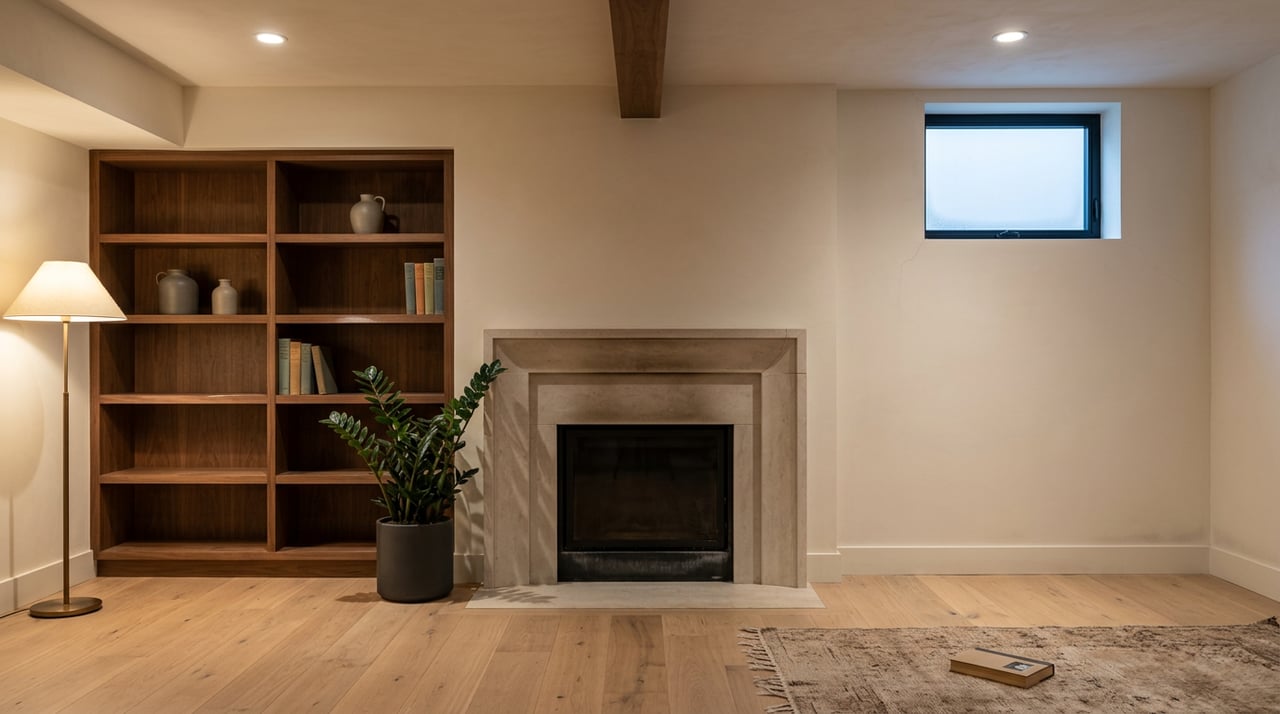
Most buyers assume a radon reading and a sewer scope finding are the luck of the draw, the kind of thing that could show up on any older house anywhere. In Greenwood Village, they are closer to a design outcome. The city wrote a building code decades ago that made large finished basements the default way to build a house here, and that same code concentrated exactly the conditions that make radon and aging sewer laterals a recurring, predictable line item at inspection. Understanding why turns two generic-sounding inspection findings into something you can actually plan for, whether you are listing a 1970s split-level or writing an offer on one.
The Math Behind Every Finished Basement
Greenwood Village caps lot coverage at 35 percent of the parcel in most residential zones and limits building height to 35 feet. On a 15,000 square foot lot, that ceiling works out to roughly 5,250 square feet of footprint, no matter how large the family or how ambitious the architect. The arithmetic pushes builders toward two-story designs and finished lower levels to capture livable square footage that the footprint cap will not allow above grade. That is not a quirk of one subdivision or one decade of construction. It is the structural logic behind why finished basements are described as standard across Greenwood Village's executive neighborhoods rather than an upgrade some homes happen to have.
Where the 1960s and 1970s Still Live
The oldest concentration of this housing sits in the corridor around the Greenwood Athletic Club, roughly between Belleview Avenue and Orchard Road, east of University Boulevard. Lots here run generous, often a third to half an acre, built up in the 1960s and 1970s when the area was first developing. The location has aged well even where the houses have not, and that combination is now driving one of the more active tear-down markets in the city. Local market analysis estimates 30 to 40 tear-down permits in 2026, up from roughly 25 in 2025, with replacement construction ranging from about $1.2 million for a custom infill to more than $4 million for a full rebuild on a half-acre lot. If you are selling one of these homes as-is, or buying one with plans to renovate rather than scrape it, the inspection findings on it are not incidental to the price. They are often the reason the lot is worth more than the structure.
The Zone 1 Basement Problem
Greenwood Village sits inside the EPA's Zone 1, the highest radon potential category the agency assigns, and the same deep finished basements that solve the zoning math also create ideal conditions for soil gas to accumulate in living space rather than an unfinished crawl space nobody occupies. Local radon testing data for the city puts more than a third of tested homes at or near the 4 picocurie per liter action level the EPA and the state both use as the trigger for mitigation. That is materially higher exposure than a slab-on-grade home would present, because the basement that makes a Greenwood Village house livable at 5,250 square feet of footprint is also the room where a family spends the most time closest to the source.
Mitigation is not exotic. A properly designed sub-slab depressurization system routinely cuts radon levels by 90 percent or more. But the cost reflects the same basement math that created the exposure in the first place.
| System context | Typical installed cost |
|---|---|
| Simpler Denver metro home, single suction point | Around $2,000 |
| Greenwood Village custom home, multiple suction points, finished-space routing | $1,500 to $3,000, often toward the upper end |
The gap is not padding. Large custom basements frequently need more than one suction point to depressurize the full slab, and an installer working in a finished lower level has to route pipe discreetly through closets or mechanical chases rather than leaving exposed conduit in a media room or wine cellar.
What Colorado Now Requires in Writing
Radon disclosure in Colorado is not a courtesy anymore. Under state law, every residential sales contract must carry a bold-faced warning that reads in part:
"The Colorado Department of Public Health and Environment strongly recommends that all home buyers have an indoor radon test performed before purchasing residential real property and recommends having the radon levels mitigated if elevated radon concentrations are found."
The same statute requires the seller to disclose any known radon test results, reports, and mitigation history, and to provide the state's real estate radon brochure to the buyer. The Colorado Division of Real Estate's updated Seller's Property Disclosure form, in use as of January 1, 2026, builds this directly into the standard disclosure document rather than leaving it as a side conversation between agents. For a Greenwood Village seller whose home has never been tested, that blank line on the form is now a visible gap the buyer's side will notice. For a seller who tested years ago and mitigated, the same form is where that work becomes a selling point instead of a question mark.
What the Pipes Underneath Tell You
Radon is not the only finding tied to the same construction era. Homes built before 2000, which describes most of the housing around the Greenwood Athletic Club corridor, frequently run original drainage lines in clay or cast iron pipe. Both materials degrade over decades and are vulnerable to root intrusion or corrosion in ways that do not show up on a visual inspection from inside the house. A sewer scope, a camera run through the lateral line from the cleanout to the municipal connection, is the only way to see the actual condition of that line before it becomes an emergency after closing. The same houses that carry the radon exposure from their basement design are, by construction date alone, the ones most likely to need this second check.
The Contingency Trade You're Actually Making
Colorado's standard contract structures the inspection period around two dates, an Inspection Objection deadline by which the buyer submits findings, and an Inspection Resolution deadline by which the seller responds. In a competitive Greenwood Village offer, waiving that contingency entirely is sometimes presented as the price of winning the house. For a home built in the 1970s with an unknown radon history and an unscoped sewer line, that waiver removes the one mechanism that would have surfaced either finding before money changed hands. A pre-offer inspection, arranged before the contract is even written, gives a buyer the same information without putting a contingency on the table at all. It costs a few hundred dollars up front and answers the two questions that matter most in exactly this housing stock.
A Few Direct Questions
Does every Greenwood Village home need a radon test, even a newer one? Yes. Radon comes from the soil, not the age of the structure, and Zone 1 designation applies to the entire city regardless of when a given house was built.
Is a passive radon system enough, or does it need power? Most Greenwood Village mitigation systems use active sub-slab depressurization, a fan-driven system, because passive venting alone rarely holds a large basement below the action level once the reading comes back elevated.
If I waive my inspection contingency, can I still negotiate a radon or sewer finding after closing? No. Once the contingency is waived, there is no contractual mechanism to reopen the price or request a credit. Any finding becomes the buyer's responsibility to address on their own.
If you are weighing a listing in one of Greenwood Village's older pockets, or writing an offer on one and wondering how firm to make it, this is exactly the kind of detail worth working through before you commit to a number. Chad Nash can walk through what a specific address's construction era means for your position at the table. Begin with a Strategic Conversation.